
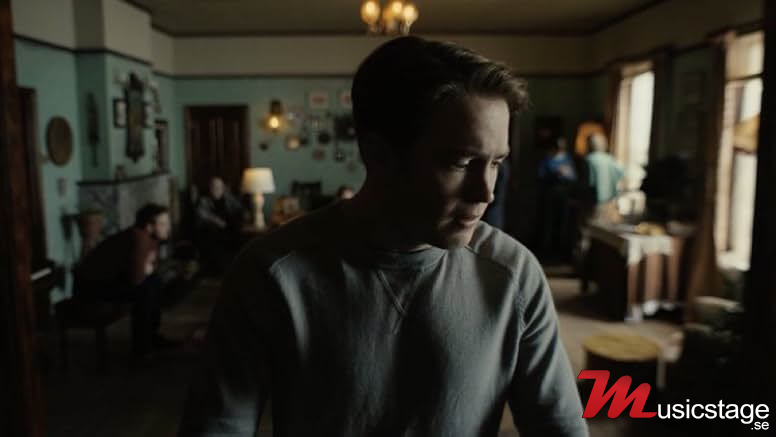
Stefan van de Graaff wears many hats: writer, director, executive producer and has even founded an advertising agency. He can see that it’s helpful when trying to understand how different departments work in this industry and that it’s useful to know a little bit about writing, a little bit about producing, a little bit about marketing and distribution to ultimately enhance one’s ability as a director. Then, he adds with a laugh:
-It´s my hope anyway.
It seems like he´s really done his homework. One of Us is his second film – his first film, Simmer, a micro-budget thriller he co-created with Nick Rush – went on quite a spectacular journey on a really small budget (in film standards).
With a small budget, no big actor-names and themself to be considered as no director-names to “sell it by” left them with few options forward – so they had to be creative.
You made a really clever new kind of marketing about it, and I think you succeeded?
– It succeeded, Stefan says with another laugh. It was a very new kind of stunt where we tried to get people to see the film and for us to learn about the process at the same time.
In short terms, the first audience were asked to stream the film simultaneously on their phones in their pockets while they’re watching the premiere in the cinema. After the screening the audience were asked to share, comment or like the film in their phones, if they enjoyed it. That’s because the algorithm counts interactions that happen after 90% of the content higher than those that´s made earlier on. It made them reach new eyeballs faster than they would have done if they just posted it on Facebook and asked everybody to like it.
Next step: put the film on Facebook for free as an ad, asking viewers to like, share or comment as a payment, if they liked it. This was to give the project some relevancy, some validity. Around here they got a DM from a sales agent, who told them that if they let the film be too broadly spread, they wouldn’t be able to monetize it so they decided to follow the advice and remove it from Facebook. But the hype was already created then.
There were a lot of steps in between, but that’s the short version. After that they began the journey of figuring out how to sell the film and distribute it more broadly. Simmer ended up being sold to HBO, but now it has landed at Amazon Prime.
As we talk we consider this quite fast journey kind of ironic compared to Stefan’s second film One of Us, that we’ve just seen the first screening of today. It took three years from when they started shooting the film in March 2023, until today, 28th March 2026 at Manchester film festival.
Ironic?
-That is ironic, that it is almost the mere image of how long it has taken. The first film, we didn’t even really submit to many film festivals because it was during COVID and they were all shut down. In this case, we’ve submitted to many film festivals and had been rejected by a lot of them. When we got the email from Manchester, it was like: finally! Our whole team was so excited that we could finally be premiering it to the people.
But are there any pros and cons of it?
It is hard to come up with any pros for Stefan, because he would have loved to release One of Us a year ago, he says. But after some thinking he replies:
– I would say that the advantage is that I know a lot more what to do, or what not to do next time, and that may have been the main pro, but we are ultimately just very eager to release it to everybody.
The cons: knowing how many fans that have been waiting patiently to see it, is one of the big ones. And the self-doubt and the sleepless nights it´s generated for Stefan, were he wondering if it ever would be released, thinking about if what he’s made wasn’t good enough to be seen or worthy of being seen.
– That can be a really depressing thing especially with such a personal film. I sort of pour my soul into the film and to have people say that they’re not interested in that, can be a little bit troubling. So that is maybe the main cons. I think that people also just want to see it, it’s time.
Filming took place in Belfast, Northern Ireland in March 2023. The location was chosen for their really supportive community for the film. Things like casting, location, and the possibility of finishing raising money for the film, were available to them in Belfast in a way other countries didn’t really offer. And their film commission, Northern Ireland screen, was just very supportive, which helped a lot, Stefan tells me.
The movie itself is deeply personal, from dealing with death and loss of Stefan’s loved ones: during a short time he lost both his mother and his son, but he also carries a hope that the film means something for somebody else. He doesn’t want this film to only be a film for him.
– I really want it to be for somebody else, to feel like they have been seen and understood from the film.
We both lost a parent, and we talk about life after losing someone close. Someone that can’t be replaced. And it strikes me how incredibly kind and compassionate Stefan is, giving me his condolences and he really sees me and where I am.
We talk about how you’ll never be the same again, you never feel whole because it’s always an emptiness there that can’t be filled. But how it eventually also becomes a new everyday. Never the same but a new version with the flaws that now exist.
-And that has been very true. So this is why I say that I hope it means something for somebody else who’s going through something similar to what I went through or who is just saddened by the reality of intergenerational trauma or hurt by what it means to be in a family. I really hope that it can mean more to somebody else than maybe it has meant to me, because I just feel broken most of the time, he tells me. We sit in an untold agreement of silence for a short while.
But how do we continue our interview after this?
We agree to just flip the side and follow my prepared questions.
I ask for a favorite memory or moment from the set and Stefan tells about a precious memory, when he picked up Kit Connor (who plays Youngest) at the airport after he landed in Belfast. They went out to dinner together that night and had a really lovely time meeting each other.
-It’s not that often directors and actors get the chance to be just human with each other, most often it’s kind of a job. There’s an expectation from each other. But in this instance, he and I sat down at this restaurant and for hours we just talked. And it was very human and it was very casual. And I cherish that because I think that made it easier for us to go and make the film then, when we already had that sort of camaraderie, Stefan tells.
I read that you looked at casting Kit as Youngest early, but you thought he might be too young for the role, so you went in another direction for that casting. But because of reasons you got back and looked at casting Kit again, with a very small time limit until the start of filming?
-The smallest time limit ever! Stefan replies with another laugh.
Stefan got in contact with Kit’s agent when they started to look into casting Kit again. The agent reassured him that Kit was really adult and mature for his age. After a phone call between Stefan and Kit, everything got in place and Kit got casted about one and a half week before the film started shooting.
Earlier this night in Manchester, Stefan told us at the screening that Kit really impressed him during the days at set, getting the smallest amount of time for preparation and learning all his lines as the lead actor (here I want to point out the achievement in this, because of the complexity of the script, that’s written in something that reminds me of Shakespearean “language” and in some free-verse lyric style). According to Stefan, Kit didn’t forget one single line, and never needed a hint of what’s next to say at any time! It’s obvious that Stefan never regretted the casting of the young actor.
The days at the set were hard though. They filmed in an abandoned tire factory that had been repurposed into a film studio and it was terribly cold and so exhausting, because of how cold it was.
-But everybody on set was just so lovely to work with, and the cast was so good to work with. They were such professionals that it was hugely positive anyway. And even as tired as I was, I finished on the last day and I told my wife: I’m exhausted and I can’t wait to do it again
Everybody talks about Kit when they’re talking about this film and he gets the main focus except for you, but what did you learn from him? And what do you think he took with him from the set?
-Oh, that’s a good question. I could speak more of what I learned from him. I don’t know what he took with him from the set. What I learned from Kit was that he settled a standard in my mind of how good an actor could be, while still being very kind and very professional. You sometimes hear stories of actors who, maybe they’re a method actor and they’re just a nightmare to work with, because they’re so invested in their craft.
Kit is as invested in his craft as any actor I’ve ever seen and as talented as any actor I’ve ever seen, but he still is extremely nice to work with. And I just think that’s so rare!
I think that it will make it difficult for me to tolerate something different than that. If somebody is being unfair, unkind or looking down on others, Kit was so kind to everybody on that set. To everyone!
Besides Kit, the really stable cast contains actors that’ve been in House of the Dragon, Derry Girls, The Dark Crystal and Outlander. Stefan really wants to highlight everyone’s work and contribution, but since we have limited time he selects a few to lift.
-I think that Charlotte Hope, who plays Sister, is incredible! I think that she has a very tall order in the film of being somebody who is extremely vain but deep, and the way that she executed that!
Spoiler alert incoming!
And her suicide scene is so moving to me, that she really loves her little brother and would do anything for him.
Spoiler alert over!
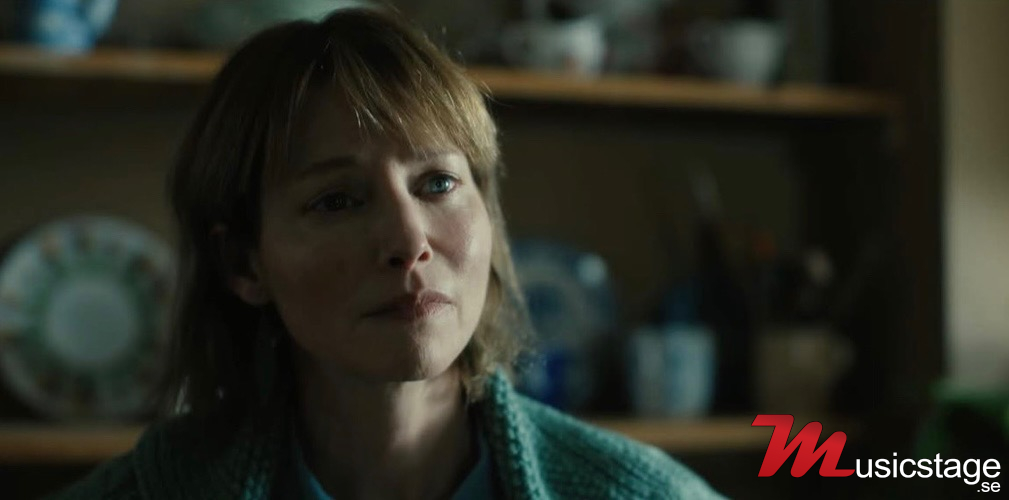
-And then the other person that I feel like I have to mention is Sienna Galerie. She played Mother. She also had an incredibly tall order. She was the first person that we cast in the film. She took a very big risk. Obviously, it’s a very risky project, it’s ambitious, it’s different. She took that risk, and she was so sweet on set. She really became this kind of maternal figure on set for everybody. She was always making sure that everybody was okay, and beyond that, she gives just one of the most complex performances of dual-nature, and I love her for it!
A friend sent a question to you, you grew up in America, Midwest, how did that shape your filmmaking?
-I think that’s a great question! Midwesterners in the United States are known for being very pragmatic, very down-to-earth. It’s where a lot of the farmlands are in America, a lot of industrial homes. It’s sort of a forgotten part of America in many people’s minds.
And because of that, you oftentimes feel the need to do what’s responsible and to just follow the convention. I think I tried to reject that as much as I could to try to do something very irresponsible and to write a film that was very challenging and maybe not like something that would come out of sort of that country of the Midwest, trying to develop my voice.
Also, like we were just saying, trying to run a set that is very down-to-earth and kind.
It doesn’t put people above others. It doesn’t really believe in any hierarchy, it is just trying to be fair and friendly for everybody. That’s a very midwestern idea. So I would say those two things.
We keep talking and comparing filmmaking in Europe and in the US. It seems like Europe has come longer in the understanding that a film can exist in more ways than just entertainment.
-I would say that making a film in Europe is a wonderful experience. I think that first of all, people in Europe have a language for film as art, not just as entertainment. Of course, this does happen in America too. But it’s harder.
Stefan points out that he don’t want to throw his American filmmaker peers under a bus here, and he is careful with the words he chooses when he explains his view of film making in the US:
-People in general are looking at films as an investment, it’s about the money, it’s about the entertainment. In Europe, there are so many films that get made that are very artistic, very exploratory, and new. And I think that One of us is a film that is hard to make without the European sort of film community supporting those types of voices.